October Newsletter
Andrea Olmsted on Ditching Synthetics, Thrifted Finds, and Wardrobe Agency
by Brandie Otter

Andrea Olmsted
For Spokane native Andrea Olmsted, the path to sustainable fashion began over two decades ago when she moved to California and found herself caught in the routine of chasing trends on a college budget. Turning to early eco fashion blogs, she soon realized the hidden reality behind bargain price tags: exploited garment workers, toxic waterways, and petroleum-based fabrics flooding the market.
That revelation sparked a lifelong commitment. Andrea organized independent sustainable fashion shows, worked with artisan design collectives in Oakland, and served as the West Coast regional coordinator for Fashion Revolution following the tragic 2013 Rana Plaza factory collapse in Bangladesh. Today, she runs Sustainable Fashion PR, helping independent and ethical designers bring conscious clothing into the mainstream spotlight.
Through her years working alongside fiber farmers, natural dyers, and zero-waste creators, Andrea has seen how fast fashion separates us from the true value of clothing. Cheap polyester and synthetic garments shed microplastics into our waterways, choke landfills, and sit directly against our largest organ: our skin. Spun from petroleum and treated with toxic dyes, synthetics trap heat and sweat while exposing us to endocrine disrupting chemicals. By contrast, Andrea views cloth as a treasure that connects us directly to the soil, whether through climate beneficial wool or thoughtfully grown natural fibers that let your body truly breathe.
For everyday neighbors in Spokane, Andrea believes the most empowering move is stepping off the retail treadmill and shopping second-hand. Thrifting became her own gateway into sustainable style, offering the creative freedom to cultivate a personal look rather than buying into mass-produced mall trends. Vintage garments from decades past carry a level of craftsmanship, rich texture, and durability that modern fast fashion simply cannot replicate.
Her advice is simple: pause before buying, choose sturdy natural fibers that let your skin breathe, and rediscover the lost art of caring for what you already have.
Tip: When browsing local thrift shops, run fabrics between your fingers before checking the label. Learning to feel the difference between synthetic polyester and natural cotton, linen, or wool helps you spot high quality, long lasting pieces every time.
Extend the life of your wardrobe? Bring your damaged clothing and worn gear to the next Mend-It Cafe, September 20th at the Spokane Valley Public Library where our volunteer menders will help you repair what you own.
Curious about how to mend yourself? join us in one of our classes and pick up a new sustainable skill.
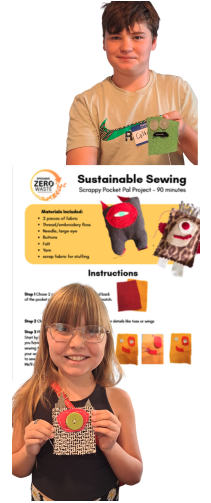
Craft Kits for kids
When we think about the future here at SZW, we envision people wearing natural fibers, having smaller wardrobes and repairing garments in expressive and unique ways. We see clothes that compost rather than pile up in landfills or waterways.
In order to make that vision a reality we’re laying the foundation through educational craft kits for kids.
Kits are designed to engage creative problem solving, teach practical skills, like sewing on a button, and deliver key learning prompts about textile waste and waste reduction strategies. The detailed instructions make is so any teacher or parent can assist a child in completing the project.
These kits are being made for after school programs. Through a generous grant from Rotary 21, we’re able to create 100 of these kits, we’d like to make more.
Will you help us create more kits and engage more young minds in sustainability? Your $35 donation means we can make 10 more kits. Thank you for your contribution
Our Classroom is Busy!
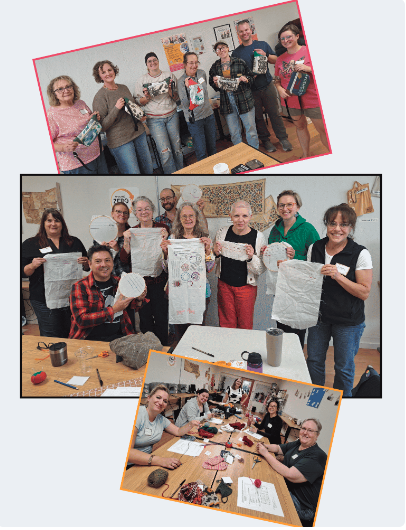
From Top to Bottom: Make an Upcycled Fanny Pack, Visible Mending I, Learn to Knit.
Our students are amazing!
And they are making amazing things. We are so delighted to welcome new and returning students to the SZW classroom for a wide variety of learning. Our classes teach practical skills, fun and useful projects and every class uses existing materials either donated by the community or waste materials from industry or found at estate and garage sales.
Do you have materials you’d like to donate for our classes? email us at info@spokanezerowaste.org
What do dog food bags and Spokane Riverkeeper have in common?
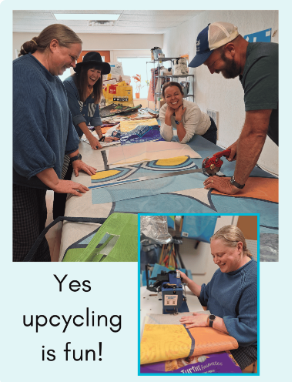
clockwise from bottom left: sewist and SZW Mend-It Cafe Manger Erin Bietz, upcycler and SZW education coordinator Tori Thurman, Spokane Riverkeeper development manager Anne Grayhek Tenold and Jule Schultz Spokane Riverkeeper, Waterkeeper.
Funny you should ask! We’re busy sewing used pet food bags together with waste promotional scrim to make recycling collection bags for Spokane Riverkeeper.
This is one way we help reduce waste and provide solutions to businesses and organizations in the community.
Our sewing team can make promotional items, client gifts and more. Interested to learn what we can make for your business? email us at info@spokanezerowaste.org
We need more empty pet food bags, please bring yours to the Community Building donation bin at 35 W. Main Ave.
Spokane Zero Waste is a 501 (c) 3 non-profit.
Our mission is to reduce textile waste through education, art, community partnerships, and advocacy. We empower people with practical skills and knowledge for self-sufficiency, to extend the life of textiles, and cultivate respect for resources.